


Bunny MUN V
Committees
General Assembly
UNEP: Super El Niño

The El Niño phenomenon is a naturally occurring climate pattern that causes heavy rainfall and flooding across the Americas while contributing to drought and increased wildfire risk in Australia and Southeast Asia. Part of the El Niño Southern Oscillation (ENSO) cycle, El Niño is an irregular climate phenomenon that occurs when the ocean warms, and low level surface winds that typically blow along the eastern equator, start to blow towards the west.Naturally caused by change in ocean temperature, global warming has contributed to unnatural shifts in EL Niño’s regular patterns. As global temperatures continue to rise, extreme El Niño events emerge, becoming a crisis that reshapes weather patterns across the entire planet. Over 60 countries experience several climate impacts during super super El Niño cycles. The urgency to address this global phenomenon is clear: disruption in temperatures and atmospheric pressures threatens ecosystems, agriculture, and populations worldwide. In 2026, the El Niño is projected to reach magnitudes greater than any recorded since the 1950s. As nations around the world brace for an unprecedented and unpredictable El Niño cycle, leaders are called upon to put measures in place to protect their civilians and infrastructure. In this committee, delegates will be faced with helping nations on both sides of the spectrum address their El Niño related crises. From flood prevention to drought insurance, solutions should address all sides of the issue in order to minimize the damage caused by the phenomenon.
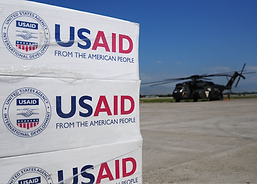
USAID (United States Agency for International Development) was a prominent US government organization that managed foreign civilian aid, leading to educational and economic growth in various developing countries. Set in place by President John F. Kennedy in 1961 during the Cold War, USAID sent emergency food, clean water, and medicine to people internationally affected by conflicts such as war, poverty, and natural disasters. For example, USAID played an important role in eliminating smallpox in the 1960s and polio in the 1990s outbreaks in Africa.
However, in January of 2025, President Donald Trump paused all foreign aid and called for reevaluation of foreign aid. In February of 2025, the USAID website went offline, and USAID employees were told not to report to headquarters in Washington, D.C. Eventually, on March 10th of 2025, the State Department announced that 5,200 USAID awards would be cancelled, which was a large majority of programs.
Currently, the shutdown of USAID has disrupted numerous programs worldwide. Healthcare assistance and efforts to fight diseases including HIV, malaria, and tuberculosis have been negatively affected, as clinics that received support from USAID have lost funding and staff. Additionally, education programs and humanitarian organizations (responsible for helping provide clean water and disaster relief) have been significantly reduced in many countries.
It is up to the WHO (World Health Organization) to consider recovery plans and how to find alternative ways to provide health and humanitarian support now that USAID has been shut down. Delegates will collaborate to discuss the effects of the end of USAID and create solutions to these negative impacts globally.
WHO: USAID
DISEC: Autonomous Weapons

In an era of unparalleled technological advancement, Autonomous Weapon Systems (AWS) have increasingly been in conversation amongst the UN. Although they may be able to function as efficient methods of defense with their ability to independently identify and attack targets without human interaction or soldiers in their stead; such capabilities also open the door for unwarranted deaths and/or complications due to the absence of a human operator to make an informed judgement. As advancements continue to happen, outlining rules and regulations for the use of AWS is imperative to sustain international stability pertaining to defense mechanisms. In this committee, delegates will collaborate to reform and propose solutions concerning the regulation of AWS; working together to yield an efficient resolution concerning the conflict presented.
With rising rates of food insecurity reaching 25.8% of the world’s population in the past year, it is heavily driven by escalating climate shocks, geopolitical conflicts, and economic instability. This global crisis disrupts agricultural supply chains and inflates the cost of living, consequently leaving millions of families to rely on cheap, high-calorie, and nutrient lacking foods. However, the approach of food fortification, in which foods are enriched with vitamins and minerals to increase nutritional value, holds much promise. A safe and cost-effective strategy, fortification can play a significant role in public health, reducing the risks of medical concerns like anemia, malnourishment, and vitamin deficiencies—especially among vulnerable populations, including refugees, displaced persons, young children, and pregnant women. Despite this, widespread implementation faces many challenges, such as weak regulatory frameworks and public skepticism towards modified staple foods. As the leading UN agency for food security, the Food and Agriculture Organization (FAO) actively collaborates with international partners in order to drive these initiatives. While the FAO provides the foundational technical guidance on biofortification, it relies on the WHO (World Health Organization) to set proper safety guidelines and WFP (World Food Programme) to distribute fortified staples in emergency zones. Delegates will discuss how to harmonize international food standards, finance fortification infrastructure, and create resilient supply chains to ensure equitable access to essential nutrition in a manner that is both environmentally-conscious and promotes health and well-being.
FAO: Food Fortification

UN Women: Sports
Gender Pay Gap

The gender pay gap in sports remains a significant barrier to equal opportunities for women, even as gender equality continues to develop worldwide. Female athletes continue to face challenges in compensation, media coverage, sponsorship opportunities, and other resources compared to men in sports. Inequalities like these discourage young women's zealous dreams of playing sports professionally. These views reinforce the idea that women’s athletic achievements are less important than men’s. The gender pay gap in sports is influenced by economic, social, and institutional factors. Differences in revenue, broadcasting agreements, sponsorships, prize money, league structures, and investment can contribute to an imbalance between men's and women's sports. The growth of women’s sports can also be limited by unequal access to funding, training opportunities, media exposure, or facilities. These challenges are especially significant in regions where women face cultural or legal barriers to participating in athletics. This does not only hurt individual athletes. Sports can provide leadership skills, education, health benefits, and pathways to employment. When women and girls lack fair access to athletic opportunities, they may also face fewer chances for educational and professional opportunities. Therefore, addressing these disparities in sports is a necessary step to promoting even broader gender equality and women’s empowerment. UN Women works to promote gender equality and the empowerment of women and girls worldwide. Delegates will collaborate to examine the causes of the gender pay gap in sports and discuss policies that can expand opportunities for female athletes. Through international cooperation, delegates will work toward solutions that promote equitable compensation, increased investment and media representation, and greater access to sports for women and girls.
Specialized
The modern digital landscape has fundamentally evolved, transforming the traditional “digital divide” from a simple question of basic internet connectivity into a highly complex, multi-layered global crisis. Today, humanity stands at a critical technological crossroads where a nation’s equity and advancement are directly dictated by its access to vital physical infrastructure. Smartphones, computers, high-speed broadband, and cognitive resilience against digital threats, are all imperative for future success. Additionally, as Artificial Intelligence (AI) and generative technologies rapidly reshape our world, a double-edged sword has emerged. While developing regions fight for basic hardware accessibility, advanced technological powers are grappling with the weaponization of AI deepfakes, propaganda, and tainted online news sources. This asymmetric access to computational resources, coupled with a lack of standardized media literacy, threatens to permanently disenfranchise underconnected populations and turn rapid innovation into a tool for unprecedented geopolitical inequality.
The mandate of the International Telecommunication Union (ITU) is to look past baseline connectivity and forge a comprehensive architecture for the modern digital era. Over the course of this committee, delegates will be tasked with balancing national sovereignty, public-private partnerships, and regulatory frameworks to fund physical networks, democratize global AI resources, and establish technical standards for digital content provenance. The decisions made in this committee will determine whether the future of technology serves as a universal equalizer or an insurmountable barrier to global development.
Advanced Specialized: International Telecommunications Union: Bridging the Digital Divide

Advanced Joint-Crisis Committee Space Race
Advanced Joint-Crisis Committee: Space Race: USSR

The ultimate ideological standoff is no longer on Earth, but in the cosmos. Just three days ago, on April 12, 1961, the Union of Soviet Socialist Republics announced the launch of Vostok 1, which propelled pilot Yuri Gagarin into orbit and the Soviets into the driver’s seat of astronautical dominance. However, unbeknownst to the world that continues to celebrate this triumph, the Soviet Council of Ministers and chief aerospace directors are facing challenges that could spell complete ruin for the famed space program.
Our early lead toward the skies can be traced to the R-7 Semyorka Breakthrough of August, 1957, in which Soviet Chief Designer Sergei Korolev developed the world’s first functioning Intercontinental Ballistic Missile (ICBM). This means that the USSR can deliver thermonuclear warheads to the U.S. in under 30 minutes. We can also launch something like…Sputnik, the world’s first artificial satellite, which was done in October of the same year. Soviet technological leads followed this up with yet another success in the Luna program of 1959, but also a devastating failure; the highly confidential Nedelin Catastrophe recently killed over 100 of the country’s top engineers during a rushed military missile test, exposing the dangerous friction between scientific prestige and atomic warfare. Internal strain has arrived in force.
Now, U.S. astronaut Alan Shepard appears to be on the cusp of launching America’s first human spaceflight with Project Mercury, meaning the Soviet cabinet has to make immediate, high-risk decisions to ensure a keeping of pace. Tensions fly over whether future space crafts should be automated as they’ve historically been for fear of a lack of human control in zero-gravity, or manual to maximize orbital weapon use. An internal struggle for finite state funding among designers is flaring, and millions of Soviet citizens are starving amidst billion-ruble space budgets. How long can our fragile balance last? Can we continue to inspire the decolonized world beneath a fracturing base? The path to the stars requires relentless strategizing to permanently overcome capitalist forces and infighting; delegates, you must defend the revolution and conquer the horizon, or crumble and watch the capitalist West seize control of the cosmos.
Citizens of the United States! Three days ago, on April 12, 1961, the Soviet Union successfully sent a man into space to orbit the Earth. It is imperative that we as a nation band together to combat the communist threat of space domination.
The Soviets have painstakingly triumphed over us in sending a satellite, a being, and a man into space. America cannot sustain another loss. It is imperative that we unite as a nation to ensure the protection of our citizens from this threat! With the radical changes in global power after the second World War, the United States and Soviet Union emerged from the war as the world’s two most dominant powers; however, as time progressed our wartime allyship dissipated, the clash of our ideological and geopolitical interests grew.
By 1961, this rivalry expanded, as it advanced within the development of science, the military, technology, and the unknown cosmos. The United States and Soviet Union are competing not only for technological superiority but also for international pride, for their countries influence, for the prestige of being first, for becoming the leading world power. The newly inaugurated Kennedy administration faces the assertive tension from the Soviet Union while also dealing with tensions of other outcomes of the cold war.
Since the launch of Sputnik 1 in 1957, the Soviet Union has reached a multitude of highly publicised milestones. The first artificial satellite, the first animal in orbit, the first photograph of the far side of the Moon. NASA acknowledged that the Soviet Union had achieved most major “firsts” of the early Space Race. On April 12, 1961 Yuri Gagarin became the first human to orbit Earth aboard the Vostok 1. Yet another “first” for the Soviets. This gave Kennedy a drive, it gave Kennedy a sense of urgency. Realizing that the US is falling behind, Kennedy ordered a rapid evaluation of the national space capabilities, and took it to congress. He announced that the US will put a man onto the moon before the end of the decade.
With this announcement , U.S. astronaut Alan Shepard is on the cusp of launching America’s first human spaceflight with Project Mercury. With Russia becoming more reckless, the U.S must demonstrate it will not allow the Soviet Union to dictate the future of space. The American aerospace industries do possess an enormous industrial capacity, advanced research institutions, and an abundance of financial resources, but the U.S. trails behind the Soviets in several major spaceflight achievements. The Soviets proved themselves capable of placing a human into orbit, while an American spacecraft remained mainly focused on short suborbital flights.
Project Mercury represents America’s immediate opportunity for Americans to prove themselves in space. Mercury remains very limited compared to the Soviet Vostok program, making the race exponentially difficult. The Space Race isn’t simply a competition between scientists. Every achievement, every feat, every launch is a demonstration of national strength that can shift the world’s perspective of American and Soviet power. As the tensions rise across the cold war, the U.S must decide how far they are willing to go.
Advanced Joint-Crisis Committee: Space Race: US
